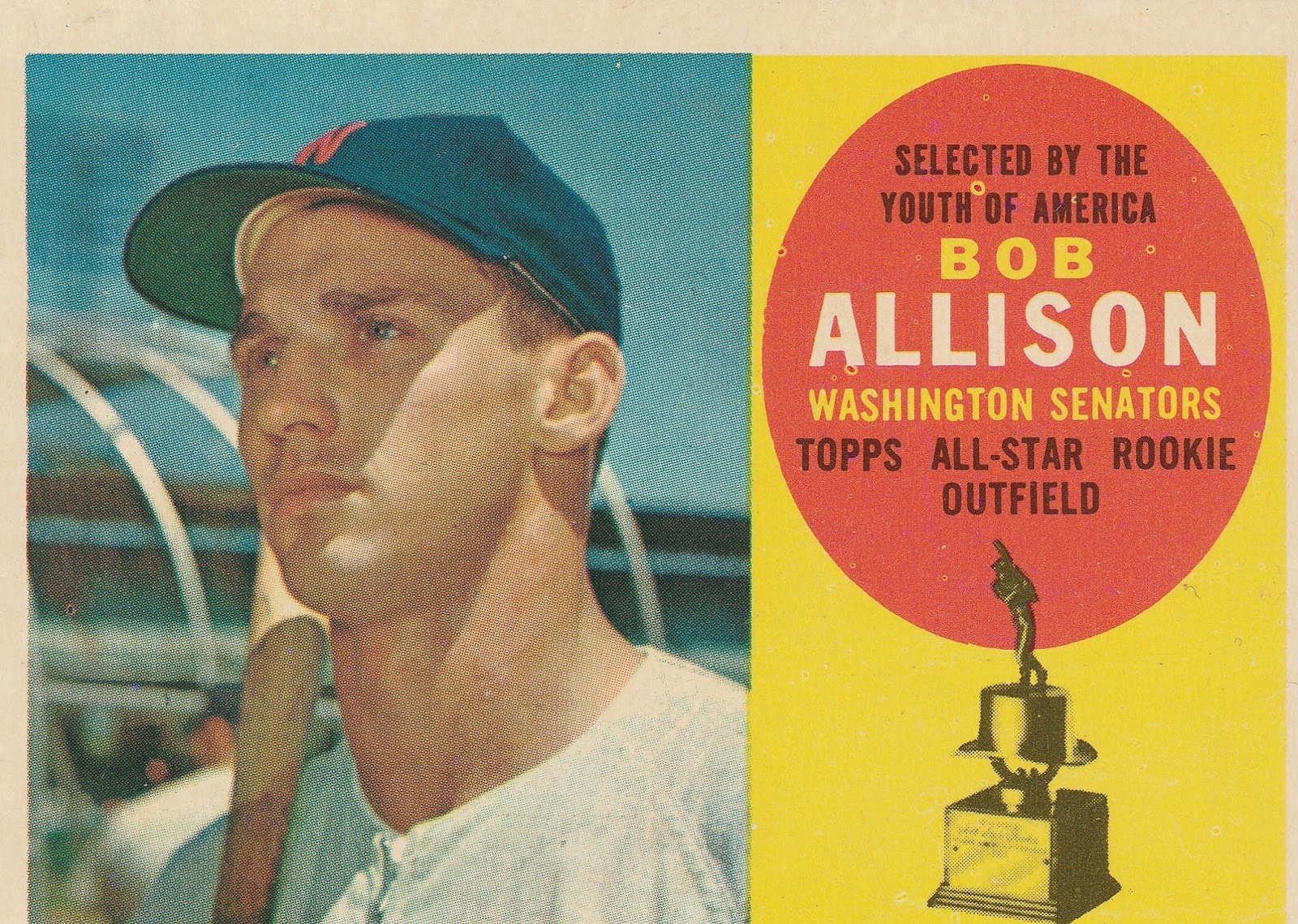
Here they are - the Topps All-Star Rookie Team, selected "by the Youth of America" following the 1975 season and featured in the 1976 Topps set.
I have completed the run of these up through 2018, specifically all regular issue cards that bear the All-Star Rookie Trophy.

Right Handed Pitcher - John Montefusco
Rookie Card
San Francisco (N.L.) 1974-1980, Atlanta (N.L.) 1981, San Diego (N.L.) 1982-1983, New York (A.L.) 1983-1986
"The Count of Montefusco" was an immediate runaway success. His first appearance in 1974 included hitting a home run and earning his first major league win. He followed that superb debut by winning the 1975 N.L. Rookie of the Year. He led all National League pitchers in Strikeouts per nine innings that season, and finished 4th in the Cy Young voting. His 215 strikeouts as a rookie was the 2nd highest total in the National League behind Tom Seaver. The following season was perhaps even better-- Montefusco was named to his only All-Star appearance, and hurled 6 shutouts. He tossed his only career no hitter in September of 1976 as well. Like many pitchers in the 60s and 70s, Montefusco was asked to pitched as many innings as his arm could handle. Oddly enough, though, his injury issues did not come from his pitching arm or shoulder - Montefusco lost significant time in 1977 due to a badly sprained ankle. He was also involved in the highly publicized altercation with teammate Bill Madlock that led to Madlock's trade from the Giants to Pittsburgh. His time in San Francisco was best remembered for his contribution to the rivalry between the Giants and the Dodgers. He was often quoted in the paper as disliking the Dodgers (he grew up a Yankees fan in New Jersey), even dedicating a shutout win to Ron Cey, and sparring with Tommy LaSorda through the press. Montefusco finished his MLB career with parts of three seasons in New York, playing for the team he cheered for as a kid.

Outfield - Fred Lynn
Boston (A.L.) 1974-80, California (A.L.) 1981-84, Baltimore (A.L.) 1985-88, Detroit (A.L.) 1988-89, San Diego (N.L.) 1990
Gold Glove, All-Star, AL Rookie of the Year, AL MVP. That was Fred Lynn's 1975 season. His September call-up in 1974 gave a sneak peek of the historic season to come - he hit .419 and slugged .698 in 15 games. In his first full season, Lynn displayed serious power - hitting a league leading 47 doubles and 21 homers. He also had excellent plate discipline, getting on base at a .401 clip. The 1975 season was tremendous for Lynn, but in his own words it was the team's success that was most rewarding. The 1975 World Series pitting the Red Sox against the Cincinnati Reds was one for the ages. In game 1, Lynn smashed a home run, but also smashed his body into the left field wall trying to secure a Ken Griffey liner. While he tied for the team lead in runs batted in for the series, and did not even leave the game in which he was injured, the crash into the wall did seem to affect him. He would be fully recovered by the next season however, and Lynn would begin a five year assault on the green monster at Fenway. 1979 in particular was a season to remember, as Lynn hit 39 homers and led the AL in batting average, on base, slugging percentage and reeled in his 3rd of 4 Gold Gloves. Was he snubbed for the MVP that season? Don Baylor won with 36 homers, 139 RBI, and 22 stolen bases.
The Free Agency era coincided with Lynn's arrival in the big leagues, and the 5 year deal he signed expired following the 1980 season. Lynn was traded to his hometown team in southern California as the Red Sox did not think they could re-sign Lynn. Adjusting to life away from Fenway was difficult. Combined with nagging injuries and a labor strike, 1981 would be Lynn's worst season to date in his career, though he still made the All-star squad. His time in SoCal was marred by injury, though he did have several All-Star appearances, and played extremely well in the Angels' playoff games, earning ALCS MVP honors in 1982 in a losing effort. As he aged, Lynn had a slow but steady decline in production. He remained a valuable part of each club, however, given the high level of play he once had, even a significant drop off was better than league average. He would retire following the 1990 season, with 1960 hits, over 300 home runs and 1160 Runs batted in. He was a 9X all-Star and a 4X gold glove winner.
Fred Lynn's Rookie Card is 1975 Topps #622 shared with Ed Armbrister, Terry Whitfield and Tom Poquette.

First Base - Mike Ivie
San Diego (N.L.) 1971, 1974-77; San Francisco (N.L.) 1978-81; Houston (N.L.) 1981-82; Detroit (A.L.) 1982-83
Mike Ivie was the #1 Overall draft pick in 1970 by the Padres as a Catcher. Ivie made his MLB debut the next year, appearing in 6 games for San Diego as an 18 year old. It would be a few years toiling in the minor leagues and a position change before Ivie would get back to the bigs. Ivie would play both corner infield positions in his first full major league season, though he was primarily considered a first baseman. His 1975 rookie season was solid if unspectacular. In 111 games for the Padres, Ivie played First Base, Third Base, and still appeared behind the plate in a pinch. He had a rough time at the hot corner, but was considered an excellent defender at first base. He also contributed 26 extra-base hits and drove in 46 runs. For Topps, this selection was forward-thinking. He would go on to much better production in subsequent seasons. He found the most success in his second stop, following a trade from San Diego to San Francisco in 1978. That season Ivie was a key component of the Giants' pennant drive, including a pair of pinch-hit grand slams. He had a career high .308 batting average for the Giants and that off-season was rumored to be included in a deal with the Twins for the services of Rod Carew - he would stay with the Giants, however, and had a breakout season. In 1979, Ivie crushed a career best 27 homers. It looked like he would be the heir apparent to Willie McCovey's role as the Giants' starting third baseman, but a freak accident with a hunting knife relieved Ivie of a chunk of one of his fingers. He struggled the following season and ended up trying to latch on with another club. He did have some success as a DH for Sparky Anderson in Detroit in 1982, but the bulk of his playing career had ended.
Mike Ivie's Rookie Card is 1972 Topps #457 shared with Derrel Thomas and Darcy Fast

Third Base - Larry Parrish
Rookie Card
Montreal (N.L.) 1974-81, Texas (A.L.) 1982-88, Boston (A.L.) 1988
Larry Parrish went undrafted out of high school and was signed by the Expos in 1972 after an appearance on the Florida Junior College All-Star team. He would be the Expos' starting 3rd baseman in 1975 at just 21 years old. He had a respectable rookie season with 10 homers and 65 RBI. He finished third in the NL ROY ballot behind John Montefusco and his teammate Gary Carter. Parrish would go on to be one of the best known players in Expos history, firmly entrenched at the hot corner for the rest of the 1970s. He's still the only Montreal hitter to have 3 different 3 HR games. Parrish reached his peak in Montreal in 1979, clubbing 30 homers and making his first All-Star squad. That year, he had a career high .308 batting average and even garnered enough votes to be 4th in the NL MVP race. He switched leagues in 1981 and spent the bulk of the 80s with the Texas Rangers as a corner outfielder and DH. He would surpass 100 RBI twice with Texas, including his 2nd and final All-Star season in 1987. Following the 1988 season, Parrish was signed to play in Japan, and hit a whopping 42 homers in his first season and added 28 more the next before retiring from pro ball for good.

Second Base - Jerry Remy
Rookie Card
California (A.L.) 1975-77, Boston (A.L.) 1978-84
Remy is now best known as the color commentator for Boston Red Sox games on NESN, a role he's held since 1988. He was a fairly good player in his day as well. Remy's rookie year, he stole 34 bases for the Angels and scored 82 runs. He was better known for his speed and defense than his bat, though he is one of a small handful of MLB players to record 6 hits in a game. Remy spent 3 seasons in California, swiping over 30 bases each year. He was even named as the Angels' team captain in his final season. His hometown team Boston Red Sox came calling and acquired Remy to be their starting second baseman in 1978, where he would spend the remainder of his playing career. In his first season in Boston, Remy was named to his only All-Star team. He would encounter several injuries in the latter part of his career, but he was considered among the best defensive players of his era.

Outfield - Dan Ford
Rookie Card
Minnesota (A.L.) 1975-78, California (A.L.) 1979-81, Baltimore (A.L.) 1982-85
"Disco Dan" Ford came to the Minnesota Twins after several seasons in the Oakland A's minor league system. His rookie campaign with the Twins included 21 doubles, 15 homers, and a .280 average. Ford was a bit of a free-swinger, and racked up more than twice as many Ks as walks in his career. He did hit for modest power numbers and was dependable in the field, usually playing in a corner. Like many of this year's rookie All-Star crop, Ford's best year was 1979. Now playing with the Angels, Ford scored 100 runs for the only time in his career, to go along with 101 runs batted in and 26 homers. He led the AL in sacrifice flies that season, and hit for the cycle against the Mariners that August. Ford was also a World Series Champion as a member of the 1983 Baltimore Orioles, hitting a homer in Game 3 against Steve Carlton, paving the way to a 3-2 Oriole win. Over 11 seasons, Ford had over 1100 career hits and had an OPS+ of 109, making him a better than average hitter for his era.

Outfield - Jim Rice
Hall of Fame
Boston (A.L.) 1974-1989
There was an embarrassment of riches in the Boston Red Sox lineup in 1975, featuring past, present and future MVPs. Yaz won in '67, Fred Lynn was the All-Everything that year, and Jim Rice was on his way to a Hall of Fame career that would include an MVP of his own coming in 1978. If Dan Ford was considered a free-swinger, he had nothing on Jim Rice. Rice would strikeout 122 times in his rookie season, starting a string of 4 straight 100 plus K seasons. It was a testament to his maturation as a player that he was able to reduce those strikeouts without sacrificing his prodigious power later in his career. By the end of his playing days, he'd have more seasons with 100 plus RBI than 100 plus strikeouts. His rookie year, however, he did both. He also hit 22 homers, 29 doubles, and scored 92 times. If not for Lynn's superb campaign, Rice may have been the ROY/MVP - he finished 2nd in ROY voting, 3rd in the MVP vote. If not for a broken hand suffered on September 21st, the Sox/Reds series may have had a different result. Yet that tremendous rookie season was nothing compared to 1978! Rice did lead the AL in strikeouts, but also in Hits, Triples, Homers, RBI, Slugging, OPS, OPS+, and total bases. He played all 163 games for Boston and scored 121 runs. He did all that in his age 25 season, then proceeded to have another decade of excellence for Boston. Left Field in Boston had been set from 1939 until 1989 from Ted Williams, to Yaz, to Jim Rice. Must have been nice to have that kind of stability! Rice retired with 1,249 Runs scored, 2,452 hits, 382 homers, and 1,452 RBI. He was voted by the BBWAA to the Hall of Fame in his final year of eligibility.
Jim Rice's Rookie Card is 1975 Topps #616 shared with Dave Augustine, Pepe Mangual, and John Scott.

Left Handed Pitcher - Tom Underwood
Philadelphia (N.L.) 1974-77, St. Louis (N.L.) 1977, Toronto (A.L.) 1978-79, New York (A.L.) 1980-81, Oakland (A.L.) 1981-83, Baltimore (A.L.) 1984
Tom Underwood was a two-sport star in High School as the starting QB and the ace pitcher in Kokomo, Indiana. He was a second round selection by the Phillies in 1972 and rose quickly through the majors after a pair of sterling seasons in the low minors. His first full season in the majors was the most innings he'd ever pitched professionally, though that didn't seem to faze him. He had a winning record at 14-13, and struck out batters at a rate of 5 per 9 innings. He had 7 complete games and a pair of shutouts his rookie season. In 1979, Underwood was the Toronto Blue Jays' Opening Day starter, one season after being named the team's best starting pitcher by his teammates. His brother Pat made his major league debut in May of 1979, and the two brothers faced off as the opposing starters. Tom pitched a complete game, but surrendered a single run in the eighth, allowing his brother to earn his first MLB win. Later in his career with New York and Oakland, he would be used in both a starting role and as a late innings reliever. In 1980 for the Yankees, he recorded 2 saves and 2 complete game shutouts. He would finish his career with an ERA+ of 100, which is exactly league average. His overall record was 86 wins against 87 losses.

Tom Underwood's Rookie Card is 1975 Topps #615 shared with Hank Webb, Pat Darcy, and Dennis Leonard

Short Stop - Tom Veryzer
Detroit (A.L.) 1973-77, Cleveland (A.L.) 1978-81, New York (N.L.) 1982, Chicago (N.L.) 1983-84
The Tigers' First Round selection in 1971, he made a great first impression by being named that year's MVP of the Appalachian League. He got his first taste of MLB action in 1973, playing in 18 games and hitting .300 for the Tigers. His first full season came in 1975, and Veryzer had less than glowing offensive numbers. He did well enough, though, to amass over 100 hits and had career highs in Homers and runs batted in. While his minor league reputation was that of a defensive specialist, he was 4th in the AL in errors committed his rookie season. His next few seasons in Detroit saw similar results with a few minor injuries mixed in to limit his playing time even further. It was his play that allowed for Alan Trammell to get his shot and the rest is history. With Trammell on his way, the Tigers traded Veryzer to Cleveland, and he did have an improved season in 1978 at the plate and in the field. His defense was back to matching the reputation he garnered en route to the majors, and in 1979 he helped turn 90 double plays and had a sparkling .971 fielding percentage at SS. In 1981 with Cleveland, it was his fantastic play on a ground ball up the middle by Toronto's Alfredo Griffin that would turn out to be the first out of Len Barker's perfect game. He would later get a chance for post-season play as well, joining the Cubs for their 1984 NLCS run. He was hitless in his only plate appearance in the series, but was used primarily for defense at that point in his career, and he played in 3 of the Cubs' playoff games.
Tom Veryzer's Rookie Card is 1975 Topps #623 shared with Phil Garner, Keith Hernandez, and Bob Sheldon

Catcher - Gary Carter
Hall of Famer
Montreal (N.L.) 1974-84, 1992; New York (N.L.) 1985-1989; San Francisco (N.L.) 1990; Los Angeles (N.L.) 1991
We save possibly the best for last - Gary Carter was in a class by himself. Despite the reigning Topps All-Star Rookie Catcher Barry Foote being on the Expos roster, Carter had no problem proving he was the man, even though everyone called him "The Kid." He played sparingly in 1974 as a late season call-up, but hit .407 in that limited duty, including his first career home run, which came against Hall of Famer Steve Carlton. In 1975, Carter was a 21 year old All-Star and came in 2nd in ROY voting behind Giants' pitcher John Montefusco. Sharing the team's primary catcher duties with Barry Foote, Carter hit 17 home runs and 20 doubles. Montreal had hit the jackpot with Carter. In 1976, Gary was still splitting time with Foote and was getting additional playing time in Right Field. Unfortunately, it was during one of these excursions in the outfield that Carter collided with Pepe Mangual (from Jim Rice's Rookie card) and broke his thumb. 1976 would be Carter's worst season, finishing the season with a .219 average and just 6 homers. He returned in 1977 in a big way, crushing 30 homers and 29 doubles with a .284 average.
His best season? In 1982, he compiled his career high in average, on base, and slugging. He had 91 runs scored, and walked more often than he struck out. But the argument could be made that his best year was one with less impressive personal stats, but intangible impacts that led to the New York Mets' world Championship in 1986. He did lead the NL in one offensive category that year - he ground into 21 double plays. He also came up big late in the playoffs, including an NLCS game 5 game winner in the bottom of the 12th inning, 2 homers in Game 4 of the World Series at Fenway to even the series, and a rally starting single in Game 6 in the bottom of the 10th.
Beyond individual moments, Carter was widely regarded as a leader in the clubhouse, both in his later Expos years and especially in New York. His Mets manager Davey Johnson called him a "one-man scouting department" because of his knowledge of opposing hitters and pitchers, which he would share with his teammates and coaches before each series and throughout the season.
Carter waited 6 years of eligibility before being inducted into the Hall of Fame, though he was among the best catchers of all-time and still today ranks among the best offensive numbers for catchers ever. The 11 time All-Star won 3 Gold Gloves in Montreal, 5 Silver Slugger awards, and is 6th all-time with 298 homers as a catcher. He was on the receiving end of 127 shutouts and one No-hitter in his career. Only 5 catchers (Yogi Berra, Carlton Fisk, Ray Schalk, and Mike Scioscia) have caught more shutouts in MLB history.
Gary Carter's Rookie Card is 1975 Topps #620 shared with Marc Hill, Dan Meyer, and Leon Roberts